Condenser Coil Cooling: Increase Cooling Power
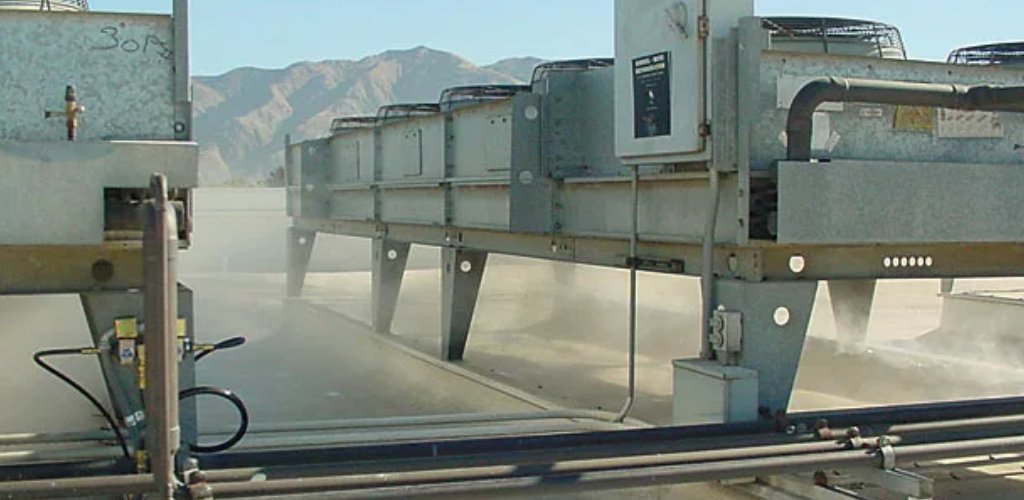
Mike Lemche, President of MicroCool, writes in Process Cooling magazine about the ability of evaporative fog to increase the cooling power of condenser coil cooling systems. This is especially relevant for aging equipment, high output systems like data centers, continuous use systems like cold stores.
Spring is a great time for businesses and those in facilities management to look at options for improving the output or extending the life of older systems. Talk to one of our team of experts at MicroCool using experience we’ve gained through over 35 years serving the HVAC industry using our state-of-the-art superior engineered products and design.
Adding reverse osmosis and MicroCool nozzle technology has positioned evaporative fogging as a reborn technology that can extend the life of air-cooled equipment.
Evaporative Fog Saves Aging Refrigeration Equipment
One of the biggest challenges to engineers and maintenance staff is how to deal with the reduced performance of aging equipment, particularly air-cooled refrigeration and air-conditioning units. With average temperatures increasing, it has become an even larger problem, and restrictive budgets on capital spending further complicate the issue. Fortunately, an old technology has come to the rescue of such equipment.
Flash Evaporation
In previous years, simple water sprinklers were employed to reduce condenser coil surface temperatures, and some water mist systems also were used. However, coil contamination by calcium and magnesium carbonate often drastically reduced thermal transmission, so the concept was abandoned — until recently. Using reverse osmosis water, as well as modern fogging nozzle technology that can create extremely fast evaporating particles, is causing an increase in the use of evaporative fogging. Instant Evaporation Drops Temperature: How It Works Evaporative fogging refers to the pumping of high-pressure (1,000 psi minimum) water forced through a series of tubes and nozzles to create a water mist, or fog.